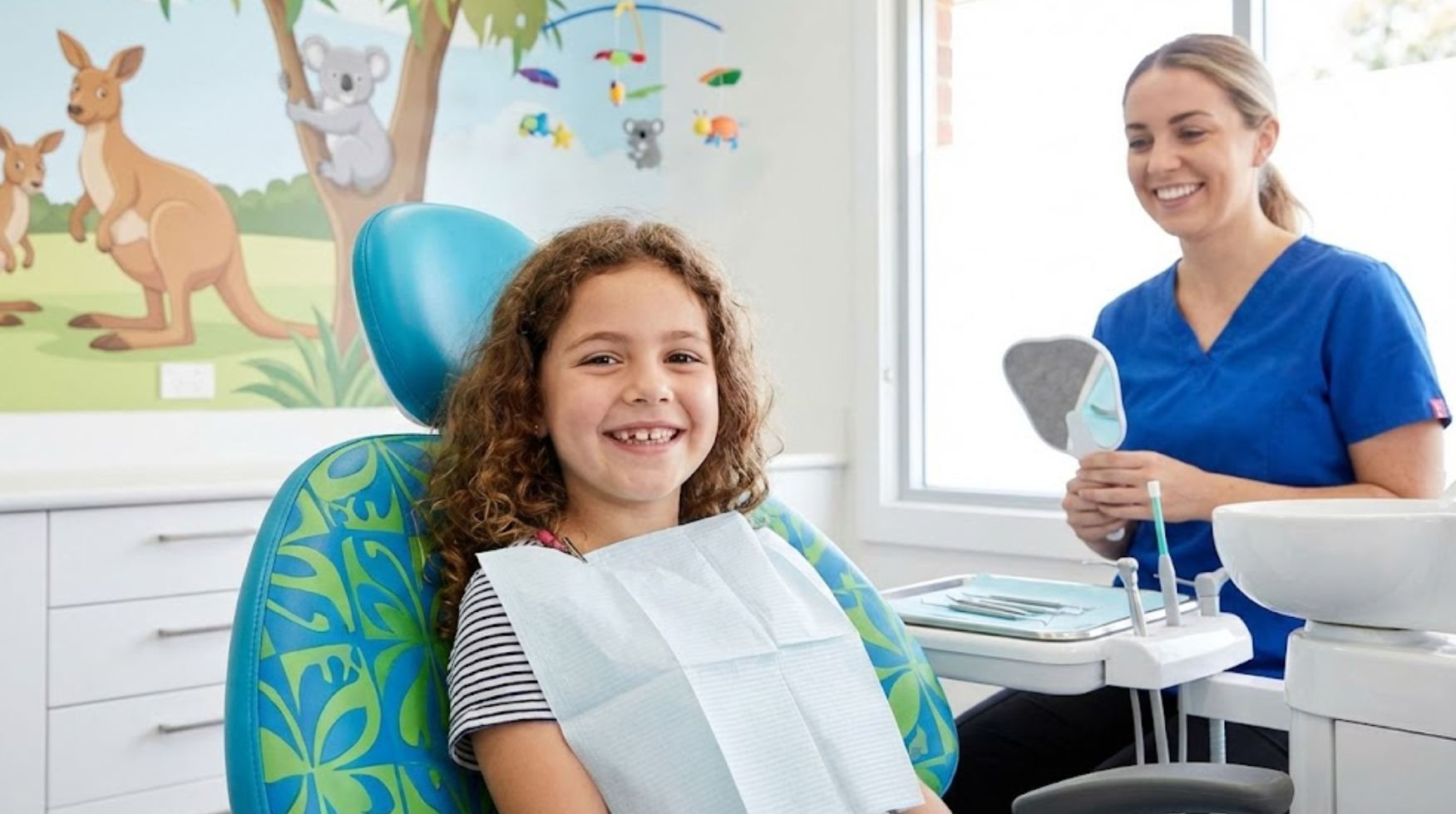
Your child's first dental visit is an important milestone. A positive early experience can set the stage for a lifetime of good oral health habits and stress-free dental appointments. Here's how to prepare and what to expect.
When Should the First Visit Happen?
The Australian Dental Association recommends scheduling your child's first dental visit when their first tooth appears, or by their first birthday—whichever comes first. This might seem early, but there are good reasons:
- Early detection of potential problems
- Establishing a "dental home" for ongoing care
- Getting personalised advice on oral hygiene and nutrition
- Familiarising your child with the dental environment before problems arise
- Preventing early childhood tooth decay, which is increasingly common
Preparing Your Child
In the Days Before
- Use positive language: Avoid words like "hurt," "needle," or "drill." Keep explanations simple and upbeat.
- Read books about the dentist: Many children's books feature characters visiting the dentist happily.
- Play pretend: Take turns being the dentist and patient. Count each other's teeth, hold a mirror to look inside mouths.
- Share positive experiences: If you or a sibling have had good dental experiences, talk about them.
- Schedule wisely: Book appointments when your child is usually well-rested and cooperative (often mornings).
What NOT to Do
- Don't bribe with treats—this suggests something unpleasant is coming
- Don't share your own dental anxieties
- Don't use the dentist as a threat ("behave or the dentist will...")
- Don't give too many details—answer questions simply and honestly
What Happens During the First Visit?
The first visit is typically short and involves little treatment. The goals are to:
Get Comfortable
Your child will be introduced to the dental team and the environment. They might sit on your lap in the dental chair or explore the room. We'll move at your child's pace.
Gentle Examination
The dentist will gently examine your child's teeth, gums, jaw, and bite. This might involve counting teeth, looking for signs of decay, and checking development. Often, the dentist uses a technique called "tell-show-do," explaining and demonstrating instruments before using them.
Discussion with Parents
You'll receive advice on:
- Brushing and flossing techniques for your child's age
- Fluoride recommendations
- Nutrition and limiting sugary foods
- Teething
- Thumb sucking and pacifier habits
- Preventing injuries to teeth
Possible Cleaning
Depending on your child's age and comfort level, a gentle cleaning may be performed. This isn't always possible or necessary at the first visit—and that's perfectly fine.
Tips for a Successful Visit
- Stay calm: Children pick up on parental anxiety. Your relaxed demeanor helps them feel safe.
- Let the dental team lead: Our team is trained to communicate with children effectively. Trust their approach.
- Celebrate afterward: Praise your child for being brave. A small reward (sticker, trip to the park) reinforces positive associations.
- Be patient: If your child doesn't cooperate fully, that's okay. It sometimes takes a few visits.
What If My Child Is Nervous?
Some nervousness is normal. Our team uses child-friendly techniques to help anxious little ones feel comfortable:
- We go slowly and give your child control where possible
- We explain everything in kid-friendly terms
- We offer distraction techniques
- We never force procedures on an unwilling child
- We build trust gradually over multiple visits if needed
Schedule Your Child's First Visit
At Mullaloo Beach Dental, we specialise in making children's dental visits positive and even fun. Our friendly team creates a warm, welcoming environment where kids feel comfortable and parents feel confident.
Don't wait—schedule your child's first dental visit today and set them on the path to a lifetime of healthy smiles.